Security Company | Security Guard Services | Citywide

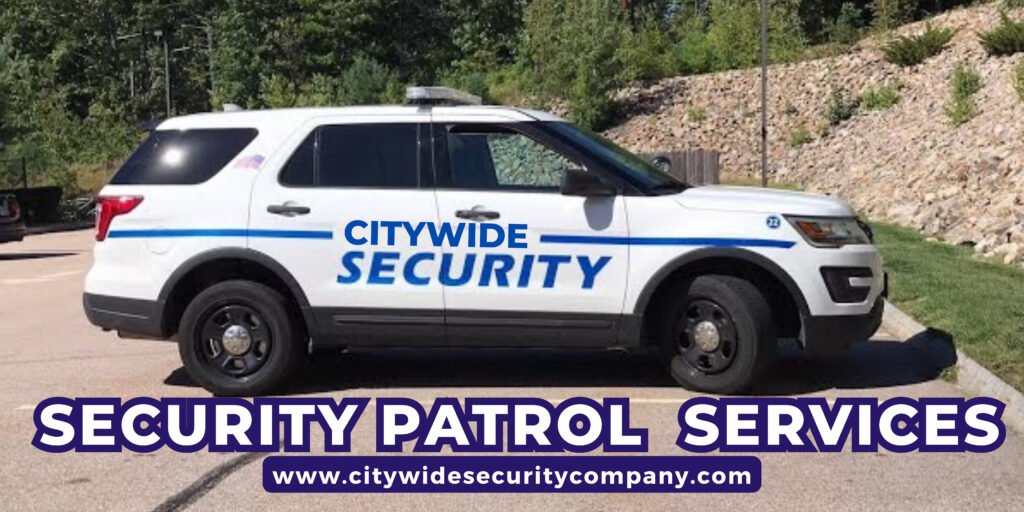
Security Guard and Patrol Services
Security Guard and Patrol Services: Why They Are an Investment, Not a Cost
When budgets get tight, “security” often sits in the same column as utilities and office supplies. It is treated as a necessary cost to be minimized, not a strategic investment to be optimized.
In reality, professional security guard and patrol services protect something far more valuable than a line item on a spreadsheet. They safeguard people, property, inventory, reputation, and the continuity of your operations. Once you look at security through that lens, the question changes from “How much does it cost?” to “How much value does it protect?”
This guide breaks down what modern security guard and patrol services really deliver, how to think about the return on that spend, and why partnering with the right security company can pay for itself many times over.
What are Security Guard and Patrol Services, really?
Most people think of security in simple terms: a guard at the front desk or a patrol vehicle driving through a lot at night. In practice, a well designed security guard and patrol services program does much more than “stand watch.”
Typical components include:
- ✅ On-site security officers
Access control, visitor screening, lobby presence, badge checks, and response to incidents inside your building. - ✅ Mobile patrol services
Marked units conducting scheduled or randomized patrols through parking lots, business parks, industrial yards, and residential communities. - ✅ Event and crowd management
Guards who specialize in guest screening, line management, bag checks, backstage or VIP area control, and emergency procedures. - ✅ Reporting and documentation
Digital guard tours, incident reports, photos, time-stamped logs, and post-incident summaries that help with insurance, HR, and legal requirements. - ✅ Integrated technology
Coordination with cameras, access control systems, and remote monitoring to turn security into a single, unified program instead of disconnected pieces.
When all of this is done properly, security becomes a living risk management system around your business, not just “a guard at the gate.”
The hidden cost of not having security
If you only look at the hourly rate for guards, security seems expensive. The real comparison is not “guards vs no guards.” It is “guards vs the financial damage you are exposed to without them.”
Some of the most common hidden costs include:
- ✅ Theft and shrinkage
Inventory that walks out the door, fuel stolen from trucks, copper stripped off a construction site, tools lost from an unsecured room. For retailers and warehouses, even a modest reduction in shrinkage can cover a monthly guard program. - ✅ Vandalism and property damage
Broken doors, smashed windows, graffiti, stolen catalytic converters, damaged equipment. A single overnight incident can erase months of what you thought you “saved” by cutting security. - ✅ Project delays and downtime
Construction sites that cannot start work on time because equipment was stolen or trespassers created safety hazards. Manufacturing and logistics operations slowed due to incidents in loading areas or parking lots. - ✅ Liability and insurance impact
Slip and falls in poorly monitored areas, assaults in parking lots, unauthorized access to restricted zones. Carriers pay attention to your security posture. A pattern of claims can affect premiums or even insurability. - ✅ Reputation and customer confidence
News of incidents at your property, stories of unsafe parking lots, guests or tenants who do not feel comfortable on site. Once that reputation damage spreads, it is expensive to repair.
In high-activity markets like Security Services Houston or busy logistics hubs in Columbus, Dallas, and Atlanta, the cost of doing nothing can easily surpass the cost of a professional guard and patrol program.
How Security Guard and Patrol Services protect your bottom line
The easiest way to treat security as an investment is to connect it directly to financial outcomes your leadership already cares about.
Here are some of the most tangible ways a well run program drives ROI:
- ✅ Loss prevention and asset protection
Visible guards and regular patrols deter theft before it happens, protect high-value equipment, and reduce opportunities for internal losses. Retailers and warehouses see this directly in reduced shrinkage, fewer write-offs, and better inventory accuracy. - ✅ Reduced incidents and claims
Trained officers spot hazards early, document issues, and respond in real time. This lowers the frequency and severity of incidents that could lead to workers’ comp claims, legal disputes, or third-party liability. - ✅ Operational continuity
By keeping loading docks, parking areas, lobbies, and construction sites safe and orderly, security supports the daily flow of your operations. Time is money. Every hour lost to police reports, cleanup, or investigation is expensive. - ✅ Improved customer and tenant experience
Guests, shoppers, residents, and employees are more likely to stay, spend, renew leases, and refer others when they feel safe. For hotels, multi-family properties, and malls, the presence of professional guards is a quiet but powerful driver of retention. - ✅ Data for better decisions
Modern security patrol services generate logs and incident heatmaps that show where you are really exposed.
That data lets you adjust lighting, re-position cameras, change access rules, or redirect patrol routes for better risk coverage without overspending.
Once you tie these outcomes to your P&L, security stops looking like a simple “hourly cost” and starts looking like a hedge against real, recurring financial risk.
Which businesses see the highest ROI from guard and patrol services?
Almost any organization can benefit from security, but some environments see a disproportionate return when they move from ad-hoc measures to a structured program.
4.1 Construction sites and development projects

Open perimeters, valuable materials, and limited after-hours oversight make construction sites prime targets for theft and vandalism. Construction site security services help prevent:
- ✅ Theft of tools, copper, and equipment
- ✅ Trespassing, loitering, and vagrancy issues
- ✅ Safety hazards created by unauthorized access
For GC’s and developers, avoiding one or two major incidents per year can easily cover the cost of a dedicated guard or roving patrol program.
4.2 Warehouses and logistics hubs
Distribution centers, freight yards, fulfillment hubs, and cross-dock facilities carry high volumes of goods and vehicle traffic. With warehouse security services, you reduce:
- ✅ Cargo theft and trailer swapping
- ✅ Unauthorized entry at docks and gates
- ✅ “Missing” pallets and unexplained shrink
Because margins in logistics are tight, even single-digit reductions in shrinkage or downtime generate meaningful ROI.
4.3 Corporate offices and campuses

Corporate environments often underestimate their risk because they feel “professional” and controlled. In reality, offices and campuses benefit greatly from structured corporate security services:
- ✅ Better control of visitors and contractors
- ✅ Protection of sensitive areas and data rooms
- ✅ Support for HR issues, terminations, and emergencies
Security in this context preserves productivity, protects brand reputation, and supports compliance.
4.4 Retail, hospitality, and events
Hotels, restaurants, shopping centers, and venues face a mix of guest expectations, high foot traffic, and public visibility. Specialized retail security services, event security guard services, and hotel security services protect revenue and reputation at the same time.
- ✅ Fewer disruptive incidents on site
- ✅ Safer parking and public areas
- ✅ Smoother guest experience during busy periods
For these properties, a single bad incident going viral online can cost far more than a yearly security contract.
4.5 Residential communities and HOAs
Multi-family complexes and gated communities increasingly rely on professional residential security services to support retention and property values.
- ✅ Residents who feel safe are more likely to renew
- ✅ Owners see fewer complaints about parking lots and common areas
- ✅ Boards can demonstrate due diligence if something does occur
Security pays back here as reduced churn, stronger reviews, and fewer disputes.
How to calculate ROI on security guard and patrol services
You do not need a complex financial model. A simple framework will help you make a credible business case.
- Identify what you are protecting
List your major risk areas. For example: inventory shrink, equipment theft, vandalism, parking lot incidents, claims, or project delays. - Estimate your current exposure
Use actual incident history where possible:- ✅ How many thefts or vandalism incidents did you record last year?
- ✅ What did they cost in replacement, downtime, overtime, or lost business?
- ✅ What did your insurance carrier pay, and how might repeated claims affect premiums?
- Model realistic improvement
Security will not eliminate all incidents, but a well run program can materially reduce them.- ✅ Conservative scenario: 20 to 30 percent reduction in incidents
- ✅ More aggressive scenario with high visibility patrols: 40 to 60 percent
- Compare savings to program cost
Take your annual cost for guards and patrols and set it against the estimated savings from fewer incidents, less shrinkage, and lower downtime. If you can show that a program can pay for itself or better, you are no longer talking about “extra cost,” you are talking about risk-adjusted profit. - Factor in the intangibles
Safety, morale, tenant satisfaction, online reviews, and brand reputation are harder to quantify but very real. Document them anyway. Leadership understands that a strong brand is one of your most valuable assets.
If you want a real-world reference point, you can see how Citywide has applied this thinking in markets like Columbus in the article on the best security services in Columbus, Ohio.
How to choose a security partner that actually delivers ROI
Not all guard companies are built the same. To treat security as an investment, you need a partner that behaves like a risk management consultant, not just a staffing vendor.
Key criteria to look at:
- ✅ Licensing and compliance
Confirm that the company and its officers meet state licensing requirements and carry the right insurance for your industry and jurisdiction. - ✅ Industry-specific expertise
Check whether they already deliver security guard services for businesses like yours, such as construction, hospitality, logistics, or corporate offices. - ✅ Local presence with multi-city reach
You want a team that understands your neighborhoods, crime patterns, and local regulations, with the ability to support you as you grow into markets like Houston, Dallas, Atlanta, Columbus, Las Vegas, or New York. - ✅ Training, supervision, and reporting
Ask about officer training, site supervision, post orders, and how incidents are reported. Good programs have clear standards and documentation. - ✅ Technology stack
Modern providers should be comfortable integrating with cameras, access control, and patrol tracking tools, not resisting them. - ✅ Responsiveness and support
ROI falls apart if you cannot get coverage when you need it. Look for a company that answers calls, adjusts staffing, and communicates clearly.
For a deeper checklist, Citywide has broken down how to evaluate guard providers in its guide on how to find the best security guard companies near me.
Why Citywide Security Company is built for “investment, not cost” security

Citywide Security Company is structured around the same philosophy as this article. Security should pay for itself by reducing risk, protecting revenue, and supporting your operations.
Here is what that looks like in practice:
- ✅ Multi-market coverage, local delivery
Citywide operates across multiple U.S. metros, including Security Services Houston, security company Dallas, security company Atlanta, security company Columbus, security company Las Vegas, and more.
Each local team understands its districts, crime trends, and customer expectations. - ✅ Specialized guard and patrol programs
From security patrol services and on-site security services to industry specific programs for hotels, warehouses, construction sites, and corporate offices, Citywide builds coverage around your actual risk, not a template. - ✅ Clear reporting and accountability
Clients receive transparent logs, incident reports, and regular reviews. That documentation is useful for internal stakeholders, insurers, and regulators. - ✅ Flexible deployment and rapid response
Whether you need temporary coverage for a project or a long-term guard force for multiple locations, Citywide can scale guard and patrol coverage up or down without compromising quality.
The result is a security program that you can point to when leadership asks, “What are we getting for this line item?” You are not just buying hours. You are buying risk reduction and operational stability.
Citywide Security Company Case Study: Turning Cost Into Measurable ROI
To see how this works in practice, consider a simplified example drawn from the kind of sites Citywide protects.
A regional logistics company operated a busy distribution yard that stored trailers and high-value inventory overnight. They had experienced:
- ✅ Two recorded trailer break-ins in twelve months
- ✅ Multiple incidents of fuel theft from parked trucks
- ✅ Frequent trespassing and loitering along the perimeter fence
The direct, documented cost of these issues over the previous year was estimated at:
- ✅ $45,000 in stolen goods and fuel
- ✅ $18,000 in repairs, overtime, and cleanup
- ✅ Unquantified reputation damage with several key customers
After a risk review, Citywide designed a blended security guard and patrol program that included:
- ✅ A trained on-site officer during peak evening hours
- ✅ Scheduled mobile patrols between 10:00 p.m. and 5:00 a.m.
- ✅ Defined post orders for perimeter checks, gate control, and visitor verification
- ✅ Digital reporting with incident logs and photo documentation
Within the first twelve months of the new program:
- ✅ No successful trailer break-ins were recorded
- ✅ Fuel theft incidents dropped to zero
- ✅ Trespassing complaints were reduced to occasional, minor issues that were resolved on site
The annual cost of the guard and patrol services was significantly lower than the prior year’s combined losses, repairs, and disruption. Just by preventing one or two major incidents, the program effectively paid for itself, while also improving driver confidence, customer perception, and the client’s overall risk profile.
This is the kind of “investment, not cost” story that well designed Citywide programs create every day: measurable reductions in risk and loss, backed by clear reporting that leadership can understand and defend.
FAQs: Security guard and patrol services as an investment
Q: Are security guard and patrol services worth it for small and mid-sized businesses?
Yes. Smaller organizations often feel security is “for big companies,” but they are usually the least able to absorb major losses. A well scoped, right-sized program can deliver meaningful protection without blowing up the budget.
Q: Do I need both on-site guards and mobile patrols?
Not always. Some sites perform best with scheduled security guard and patrol services that combine static posts at key hours and mobile patrols during lower-risk periods. The right mix depends on your layout, operating hours, and incident history.
Q: How long before I see a return on my security investment?
In high-risk environments such as construction, logistics, or high-traffic retail, clients often see clear improvements within the first few months in the form of fewer incidents, reduced shrink, and better tenant or customer feedback. For lower-risk sites, the payoff is more about avoiding rare but very expensive events.
Q: What is the first step to turning security into an investment?
Start with a structured risk assessment and an honest review of your incident history. From there, design a guard and patrol program that specifically targets your top three or four risk categories, then track results quarter by quarter.
Next steps: Treat security like part of your growth strategy
Security guard and patrol services are not a luxury. They are a control that protects your people, property, and profit from threats that are only getting more complex.
If you are ready to move away from “how cheap can we get security” and toward “how smart can we invest in protection,” the next step is simple:
- ✅ Review your recent incidents and near-misses
- ✅ Identify your highest-value assets and highest-risk locations
- ✅ Have a real conversation with a provider that understands both risk and ROI
Citywide Security Company helps businesses, property managers, and community leaders across the U.S. design security programs that protect what matters and make financial sense.
👉 Start the conversation today by requesting a no-obligation quote:
Request a security service quote.
Additional Resources
- 10 Best Practices to Improve Warehouse Security
- 10 Proven Strategies to Help Security Companies Recruit High-Performance Security Guards
- 10 Reasons to Hire Security Companies in Atlanta
- Ensuring Reliability and Professionalism of Guards
- Houston Apartment Security Services
- How to Choose the Right Security Company in Indianapolis?
- How to Select the Right Security Company – Top Tips!
- Reasons Why Security in Healthcare is Crucial for Patient Safety
- Security Company Financial Insights: A Closer Look at Profitability
- Top 10 Questions to Ask Your Atlanta Security Guard Company
- Top 5 Mistakes to Avoid When Hiring a Security Company
- Top Security Alternatives to Allied, Securitas, & Gardaworld